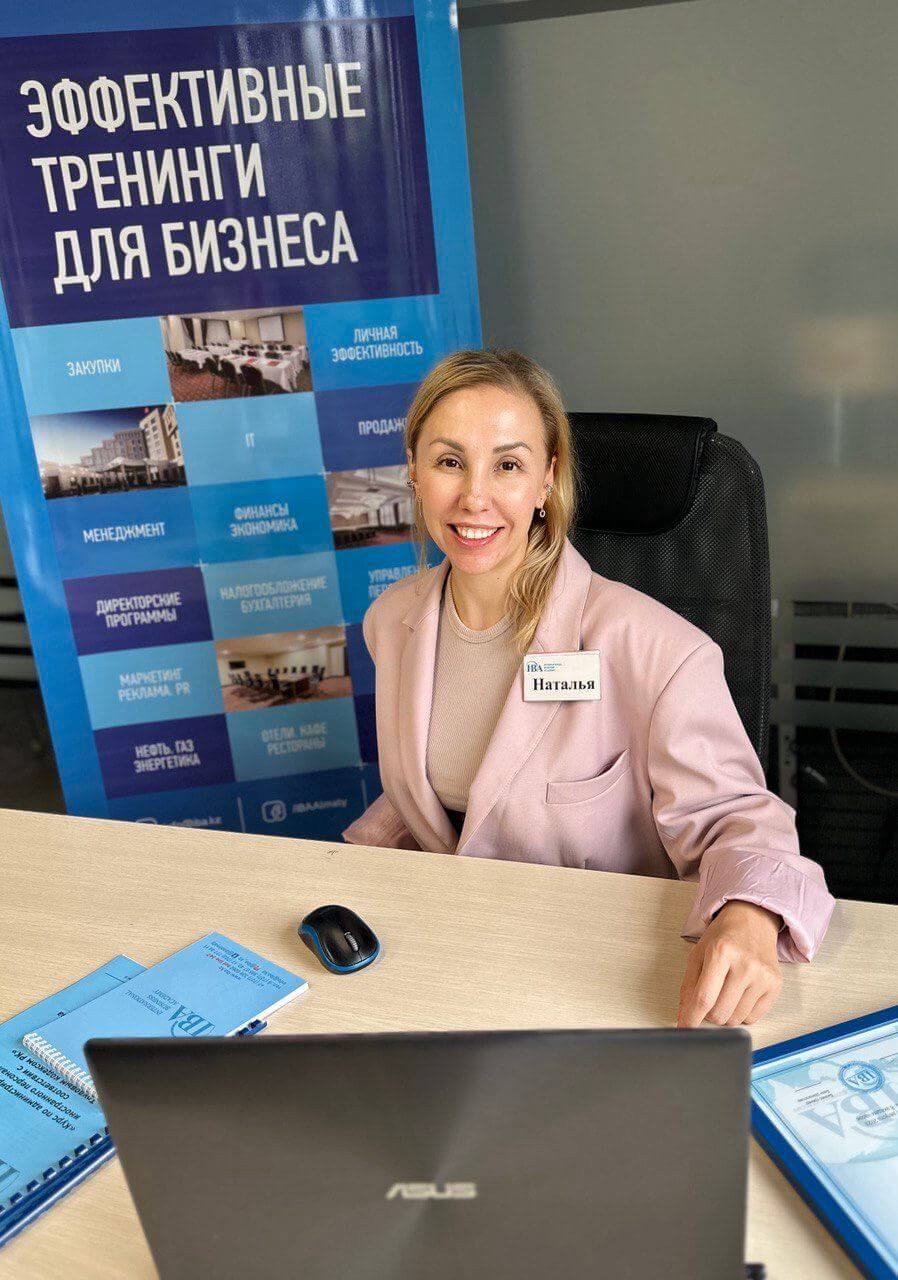
The seminar can be held online on the official International Business Academy platform. On completion of the training you will be given a link to the recording, which will be available for one month.
*dates are subject to additional confirmation
excluding VAT
* VAT of 16% will be added to the invoice
The training will include many practical cases and exercises in order to build a lasting skill in working with a team.
We will go through the theory in mini-blocks and consolidate it in exercises and business games.
The learning process should be not only informative but also interesting, and work with the team should be effective and in step with today's business realities.
As a result of the training you:
— Will master modern team management theories and build the skills of effectively organising work with employees
— Will practise techniques for setting tasks so that employees actually complete them
— Will learn to apply various motivation theories and use non-material motivation to the full
— Will learn how to increase staff engagement and apply it in work and life
Management
The manager's roles and functions
The management cycle
The concept of a business process
Classification of process chains for performing work
Principles of building and optimising business processes
The manager as team leader
Leadership styles: identifying your own management style
Situational leadership: concept, principles and forms
Determining the subordinate's readiness levels when setting tasks: «can, want to», «can't, want to», «can, don't want to», «can't, don't want to»
Planning as a management function
The classic triad of managing subordinates: «setting the task — delegating authority and allocating responsibility — monitoring execution»
Types of goals (strategic, tactical, quantitative and qualitative), their formulation and criteria (SMART analysis)
Setting the task and motivating staff to complete it
Forms of setting tasks for subordinates: by problem, by result, by algorithm
Choosing the form of task setting depending on the subordinate's readiness level: principles and rules
The influence of the manager's personality and management styles on the level of staff motivation
Transferring responsibility and authority as a motivating factor: advantages and fundamentals of delegation
Managers' mistakes that hinder effective delegation
Myths about multitasking
Communication in the delegation process
The control function
Basic principles of organising control, forms and methods of control;
Types and purposes of staff appraisal
Feedback to the subordinate on task results: communication techniques of motivating feedback and evaluation of work results
Methods of giving conflict-free criticism. Role play
Mentoring and developing department employees
Fundamentals of andragogy. Specifics of adult learning
Forms and methods of professional training
Training at the onboarding stage of a new employee and training an experienced one, approaches and motivation to learn
Mentoring and ongoing monitoring of employee effectiveness, how to combine these tasks: coaching tools
Skills of positive and negative feedback
Fundamentals of staff motivation
The essence of the concepts of motivation and incentives: the goals of motivating staff
Motivating with regard to subordinates' needs. A. Maslow's hierarchy of needs
Motivators and stabilisers
«Expectancy theory»: Classification of rewards. Motivational analysis of subordinates' expectations
The conversation method using the «5P» technique
Motivating an individual employee and motivating a team: fundamental approaches and differences
The 5 languages of appreciation as a practical tool of non-material staff motivation
Wrap-up
Summing up the training
Participants' reflection